Friday, 22 September 2017
Tanzania leaves OGP: watershed moment?
Tanzania is leaving the Open Government Partnership (OGP). This was a country lauded by OGP itself to the extent that the initiatives Africa regional meeting was held there, even while its government closed down newspapers. An awkward contradiction. When I spoke to ordinary citizens there, this was a government that had not earned the trust of its people and arguably had no place at the OGP table. The lesson of Tanzania, therefore, is surely that an initiative like OGP has to have red lines, and that the currency of credibility is trust.
So what can we learn from this? I would argue that including recalcitrant countries within an initiative that is there to open up government to the people undermines that initiative itself, in turn arguably doing harm to that relationship by creating a form of whitewash that removes incentives for genuine reform. Therefore there should probably be fewer members of OGP but those who remain could inspire others. And there’s always a route back into OGP. Tanzania is in reverse gear but that’s not inevitably the future.
Change is messy
But this isn’t a purist argument either. No government in the world is perfect, as my own in the United Kingdom is so magnificently demonstrating at the moment. It’s fine to have a messy picture. At this meeting in South Africa I remember passionate, fiery but deeply cynical civil society activists lamenting the state of their own governance while OGP’s own Paul Maassen urged them to see OGP as a lever to exert pressure and to hold those elites to account. OGP can be a space for citizen-state contestation with chaos, collision and innovation on both sides. That’s a perspective on power and its one that holds a lot of purchase, so long as there is sufficient civic space for that to happen.
Down with technocracy
At this week’s UN General Assembly Sanjay Pradhan, the CEO of the OGP, released a collection of essays themed on the essential role of trust. At the event EU Commissioner Timmermans, one of the more human of the Brussels political class, talked of citizens demanding their governments to do less talking about openness and more doing about it. As Gov says ‘trust me’ the citizen response is increasingly ‘show me’, he said. That sort of thinking is such a long way forward from the way those in the opengov community used to talk about it. I’m hopeful that the days of fetishising technology, lauding technocracy and placing faith in simplistic ‘feedback loops’ have now been replaced by serious analysis of the messy, contested way in which change in governance actually happens.
Watershed moment?
Because if it has, then Tanzania could be a watershed. Rather than despair at the withdrawal of a country that should probably never been a member because its polity was simply not ready, now could be the time to redouble efforts, but do so with eyes wide open. A lesson of Tanzania is to know what the red lines are: freedom of the press for example. And to apply those red lines. Another, as I was told by Amina in Dar es Salaam, is to measure the right things: like trust. Or legitimacy. Or justice. Not report cards. Nor projects. Nor activities. Trust is intangible, and there’s no app for that.
High stakes
So I hope Tanzania is that watershed. And while some more Governments should be shown the door, we should champion others who are joining OGP right now and those continuing to make real strides. OGP isn’t the be all and end all of everything, and there are other routes to improving governance. The SDGs for example. But it is a barometer of sorts and one worth supporting, not least as the crisis in State legitimacy is now leading us to some very dark places. People who do not trust their political class and feel marginalised reach for extremes. That’s human nature. One extremist now runs the most powerful country in the world. So this is high stakes, and it’s incumbent on us all to pull together.
Tuesday, 20 June 2017
Broken Britain: A Conflict Assessment
Terrorism in London Bridge and Finsbury Park. Fire and fury in North Kensington. Race hate and bigotry in the wake of the Brexit Referendum. Is Britain broken, and if so do we understand how broken and what to do about it? I thought it was time to measure ourselves against a peacebuilding framework. The conclusion is that, while our institutions are relatively strong, the underlying currents of marginalisation, exclusion and widespread injustice leaves us in a dangerous place.
Measuring peace
I thought the five Peacebuilding and Stability Goals (PSGs) of the New Deal for Engagement with Fragile States (New Deal) was a good place to start.
The New Deal was exciting because it was developed and designed jointly between fragile states and richer donor governments. It’s not a panacea, and I wrote here about its inherent flaws. But it’s a useful framework, and one which I hope gives food for thought.
The PSGs, which are intended to guide all work in fragile and conflict affected states, are:
- Legitimate politics: Foster inclusive political settlements and conflict resolution.
- Security: Establish and strengthen people’s security.
- Justice: Address injustices and increase people’s access to justice.
- Economic Foundations: Generate employment and improve livelihoods.
- Revenues & Services: Manage revenue and build capacity for accountable and fair service delivery.
Legitimate politics
![]() |
| Radical preacher |
But on a more fundamental level do the political elites still command the confidence of the people? I would argue that the vote to leave the European Union had less to do with the merits of Britain’s membership of the EU (not least because that was hardly discussed in the referendum campaign in favour of immigration) and more to do with widespread disenchantment with the political classes. This was exploited by a populist party, UKIP, using slogans and tactics reminiscent of Europe in the 1930s. That is not a healthy place to be. Just how unhealthy could perhaps be seen by this week's attack on a Muslim community leaving Ramadan prayers by a man raving about "killing all the muslims".
Security
Britain is generally a safe place to be. Crime is not for most people a daily experience. The attacks on London Bridge and Finsbury Park are horrific yes, but notable mainly for their rarity.
But are we really as safe as we think we are? Hundreds of women die at the hands of their partners in Britain. And our violent crime levels are actually among the worst in the European Union. Young black men are dying from stabbings and knife crime at an alarming rate, with a morbid annual tally reported on every year. This is the same part of the population that is significantly over represented in the criminal justice system. If we are serious about establishing and strengthening people’s security, we have a long way to go. We could learn, perhaps, from other fragile States who themselves have made more progress in reforming their police that we appear to have to date.
Justice
If you are arrested and charged in Britain you can reasonably expect to receive a fair trial. Our institutions are among the best in the world and, largely because of imperial history, are replicated throughout the English speaking globe.
But what do we mean by justice? Beyond the institutions do people really feel that this is a just country? On Thursday morning I woke up to a fire in a tower in the area of London where I live. A few days on and it is now clear that nearly 100 people died in the most appalling circumstances. Their story, and the culpability of officialdom who repeatedly ignored them in life, while continuing to fail their families in the wake of their deaths stands as a dark indictment of our society. I find it almost beyond comprehension.
And why were they living there? Poor people live in tower blocks in this country because there is, and has been for decades, a massive housing shortage. Yet while social housing is not built, local authorities do permit developers to construct large luxury accommodation which is often bought as an investment and left to stand empty.
If you are poor in today’s Britain, this is how the system can and will treat you. That, in nobody’s eyes, can be called just.
Economic foundations
Britain’s economic foundations are arguably weak. A country that forged its way based on manufacturing is now almost completely reliant on the services sector. And that too is largely reliant on access to markets, the largest of which this Government through Brexit is intent on leaving. Economic opportunities are centred on London and the South East, leaving large parts of the population in the former manufacturing areas, without much to go on. In fairness this Government has in the past demonstrated sincerity in attempting to develop a “Northern Powerhouse” of growth, but this is likely to take decades and will be vulnerable to external shocks.
The residents of Grenfell Tower lived in prosperous London too, however. The contrasts in this city between some of the richest real estate on planet Earth placed right next to some of the most deprived areas of the United Kingdom, with widespread poverty and higher levels of crime, is a permanent reminder both of injustice and the insecurity that that injustice breeds.
Revenues and services
The ability to manage revenue and deliver services accountably and fairly is fundamental. On the surface Britain does have the basics right. A health service that is the envy of the world, for example. But this is now a country in which a local authority can completely fail its citizens, leading many of them to lose their lives as a result, and then fail them again to such an extent that the national government has had to step in. And nobody has resigned. Kensington Town Hall was stormed by those citizens last week, who felt they had no other way of holding anybody accountable.
So what?
Britain is hardly the only European rich country to be marked by glaring inequalities and injustice. But at some point we have to decide whether our generations are going to just pass that along to the next. As we look at ourselves in the mirror in the weeks ahead, we have some serious questions to answer.
Monday, 22 May 2017
PDIA: Running before walking?
I’m beginning to wonder how much more PDIA has to offer, in particular for working in volatile and contested contexts. Not that I don’t remain a big fan of Matt Andrew’s work, but because I think it’s time some reality checks were applied to how it seems to be developing. If we don’t do that, I fear that the drive to move away from rigid top down approaches might lead us to another extreme, which could actually do some real harm.
Running over planning
Matt has recently posted several blogs in which he explains how he and colleagues at Harvard have been deliberately minimising the workshopping at inception periods of PDIA programmes, in favour of ‘launchpad’ style events of no more than 1.5 days which seek to construct, deconstruct and then lead to action on the problems which have been collectively identified. He argues that the traditional evidence gathering period, complete with week long inception workshops rarely get either the diagnosis or the plans right at the outset, so it is better to adopt a more bite-sized approach in which action generates learning which in turn can shape action.
Having just experienced another week long inception workshop I have a great deal of instinctive sympathy for this. But only to a point. In the workshop I just took part in, the real value wasn’t just the “data” or “evidence” we generated. No, it was the trust we developed between local partners and international actors, both of whom are about to embark on a programme in a conflict affected country, where there are very real risks of things going wrong. That just doesn’t fit with a ‘launchpad’ approach on its own.
Bias and power
Andrews does however argue persuasively on the importance of internal rather than external actors (consultants or people from donor agencies) leading this initial work. That is absolutely right. Andrews couches this in terms of navigating the biases that external actors inevitably bring. I would argue however that this is also about navigating the power asymmetry between those actors, invariably donors or wealthy INGOs, and their local partners. It might be veiled in positive language about solidarity, but that power imbalance is there, and it isn’t going anywhere soon. If you want to get the real picture, you’ve got to step back and be prepared to hear unwelcome truths. This lack of self awareness among donors even extends to the more progressive among them, who understand the need to incentivise learning from failure.
The ‘evidence hurdle’
Andrews argues for a one page plan arising from a quick and pressurised ‘launch pad’ into action, as the ideal PDIA approach. I don’t have an ideological problem with that, but I do just wonder how much Andrews and his colleagues have considered the evidence of at least the last 20 years from the peacebuilding sector. Scholars, policy makers and practitioners alike have all argued that to understand drivers of fragility, and to build peaceful relations that break deep rooted conflict systems, requires an analytical approach that guides long term engagements. That’s not to say you don’t need to be flexible and adaptive – in fact conflict affected states are in that sense the most relevant places for PDIA thinking to guide our work. But to jettison an analysis-guided approach in favour of just ‘getting on with it’ is itself a bit retrograde.
Combined endeavours
That workshop I just did? It’s a programme that will adopt an approach that has taken much of Andrews’ earlier work and adapted it to a peacebuilding programmatic framework. I’m really excited about it, but also daunted at the scale of the challenge. I feel what we need to do is learn how to combine different approaches, taking the best of both rather than adopting PDIA wholesale, particularly some of the points Andrews argues in these latest blogs. In that way we could really begin to get to a level of change that always seems somehow just out of our reach.
Who's up for a learning agenda which combines power, conflict and governance thinking?
Thursday, 11 May 2017
Good Governance, or good enough?
But what is the plan, next? Is it really crisis averted, and we can now look ahead to a bright new dawn of advancing good governance around the world? For those of us who would like to see the sort of progressive agenda represented by the Sustainable Development Goals, specifically SDG16 on Justice, Peace and Governance, what does success look like?
Justice is relative
As with poverty, so it is with justice. Although there remain examples of top down, technical approaches to “justice reform” which ignore context and prioritise the implementation of Western models of law, most objective observers accept that this approach will continue to fail. And where you’re talking about countries that are volatile, contested and prone to conflict then you could be entrenching the very factors that perpetuate that fragility.
So how to think about success? No easy answers. But it seems to me that the only models likely to work are ones that accept what might appear to be unpalatable aspects of the way communities settle their differences, without compromising on core values of human rights. This isn’t a challenge exclusive to ‘developing’ countries either. In the United Kingdom for example there is a live debate about the extent to which informal systems of law might at some point integrate with the formal State systems.
Positive, not negative peace
SDG16 holds that very person has the right to live free from violence or the threat of violence. A cursory look around reveals that the trend is very rapidly going in exactly the opposite direction. I worry too, however, that we lose sight of what ‘peace’ actually means. Within the peacebuilding community it is a familiar concept that peace is not simply the absence of violence, which you could measure by body counts. That could just mean that the violence is displaced elsewhere, or that the threat of violence remains due to unresolved grievance. That is so-called negative peace. It is time the idea of positive peace, meaning the ability of citizens to pursue grievances without recourse to violence, took wider hold. This would mean, for example, justice or governance institutions that are perceived to be legitimate by all sections of the population and are thus used as a means of settling disputes or contesting competing political ideas.
Good or good enough governance?
Is all corruption bad?
Rampant corruption is harmful and dangerous. It robs people of their futures and perpetuates human misery. Connivance between State elites and foreign firms to avoid tax is unforgivable. The hollowing out of State owned enterprises, such as we can see with Kenya Airways for example, is rightly challenged. But we need to be careful about the entirety of what we wish for in the next 10 years. Many of the States that are now members of OGP for example are ones in which the rule of law is a process of negotiation, rather than rigid application. The State is still negotiating with its citizens, and citizens with each other. What that will need to mean is action plans that take account of that longer term, wider process of evolution rather than ones that envisage some kind of immediate transparency revolution fuelled by the holy grail of data and technology where wrongdoing is rooted out mercilessly at every level. Human societies just don’t work like that, and the collateral damage that such an approach might provoke in some places would lead to very real dangers for the poorest and most vulnerable people. That, to me, is more important than targets.
Vision
A girl or boy born in 2015 will be entering adulthood in 2030. What do we want for them? If we want them to be confidently looking ahead to a lifetime of productivity, free from fear of violence and confident they can achieve their potential on their own merits, then we may need to reflect on how best we serve their future. Good enough may actually be better than good.
Monday, 24 April 2017
What is the value of civil society?
David Sasaki of Hewlett has written a first class post which throws down the gauntlet to civil society: either shape up to the extent that the people you claim to represent appreciate your value, or ship out. Harsh perhaps, but overdue. Sasaki calls for a frank conversation, and does not disappoint:
“Many civil society organizations do not add substantial value to the lives of those they claim to represent. They are more focused on pleasing their wealthy donors than the people they intend to serve”.Sasaki’s next observation, however, is even more challenging, in particular for Northern INGOs beloved of policy reports and conferences in important places. Quoting former Hilary Clinton staffer Anne-Marie Slaughter he notes that CSOs:
“…will need to do more than just technocratic policy analysis if they are to remain relevant in our age of institutional distrust and government dysfunction”.Phew – I can hear many famous names within Northern civil society say, that’s not us. We do field programming in hard places as well. But how much of that programming is driven by bottom up need, shaped by what communities themselves are saying that they want, compared to pre-cooked Northern policy agendas from both civil society and the donor community? I think most of us know the answer to that one.
So while I agree with Sasaki’s diagnosis of the problem as far as it goes, I think he overlooks another critical element. That of the role of donors in creating the very incentives that require CSOs to be ‘focussed on pleasing their wealthy donors’. Until both Foundations and statutory donors stop creating such a short termist and questionable set of incentive structures, including the widespread use of profit-making firms at the expense of civil society with questionable impact, then it is difficult to see this changing. The current 'payment by results' fad is hardly conducive to this either.
I also disagree with the primary treatment he prescribes. Sasaki says that civil society should catch up, emulate and seek to support more people like Maria Sarungi Tsehai in Tanzania. Maria is a deeply impressive individual who uses social media to mobilise and amplify the voices of communities often overlooked by powerful elites. I have had the privilege of working with Maria in the past (interestingly enough as a donor) and I agree that this sort of politically informed working is by far more impactful than standard and pre-shaped governance programming. Yet I do not think that civil society is necessarily right to emulate individuals like that, but rather to find and develop others like her.
In some ways this speaks to Positive Deviance programming, which the work of boundary-pushing organisations like Twaweza in Tanzania have done much to advance. In my reply to Sasaki’s blogpost I gently pointed out that those positive deviants might not be as highly educated, resourceful or fluent as Maria. But their ideas are just as important and in many ways more so. Hence learning from another resident of Dar es Salaam, Amina. Her life chances were robbed by State corruption and continue to be shaped by it. Yet her commitment to public service and piercing analysis of where problems really lie and what needs to be fixed is compelling. It's just not presented in policy or development-speak.
But to develop this new way of working, which we can all agree is likely to be working with the grain rather than against it, and thus more transformative than policy-led technocracy, the inescapable conclusion is that donors will need to buy into this agenda too. So far, there are precious few signs of that at scale.
Sunday, 1 January 2017
Hope for 2017: disruption, discomfort and adaptation
In a small hamlet in Turkana, Northern Kenya, is a teacher called John. This man and his wife are quietly dedicating their lives to changing the worlds of boys and girls in one of the toughest places in the world to be born. The land is semi-arid. All indices of poverty and violence are near the top of the scale. Teacher John is fluent in three languages, highly educated and could be living a very comfortable life. Yet he lives in the house above, placing hot ashes in front of the door every night to ward off the snakes. He’s sunk his own money into building a blockhouse for girls to sleep in so that their parents feel confident they won’t be attacked if they attend school, and has opened doors to opportunities for his pupils that would simply not have been there had it not been for what happens at that school. It’s not as if he is after recognition or reward. It takes hours to get there over roads that barely exist, and with armed guards to ward off potential attackers. Former pupils act as the schools sentries at night. But he and his wife do represent hope that seems to be in such short supply as we enter 2017: that those quiet heroes best represent humanity’s capacity to make progress despite the odds being loaded overwhelmingly against it.
Our challenge is to find those quiet heroes and support them. But to do so will mean disruption, discomfort and adaptation to the way we work. If we can do that, though, perhaps 2017 can be the point where we started to really change the world for the better.
Disruption: getting our house in order
There is an inherent contradiction between the generosity of spirit that individuals repeatedly demonstrate by, for example, donating to appeals or working with refugees, and the consistent polling which reveals scepticism about the aid industry, or aid itself. The latter is grist to the mill for the Daily Mail brand of nationalism.
But is it so complex? If the average British voter were to see the work that Teacher John is doing they would be likely to want to support it. We see this time and again in response to appeals such as Comic Relief. That’s good. So it tells us we need to be much much better at telling these stories effectively.
But there’s also an inescapable conclusion that the diet of fundraising featuring patronising stories about poor people has to end. And there is legitimacy in the criticism of the size of salaries at the top of the aid industry, in addition to the vested interests that shape the way that large INGOs and private contractors behave. And, lest donors think that they are above criticism, they have shaped the industry that now exists. If they continue to fund the sector on the basis of payment by results and short term projects then the private contractors will grow ever more rapacious and large INGOs ever more inflexible. We all need to change.
Discomfort: getting serious about conflict
Armed conflict is rising inexorably, with the death toll and human misery it brings. We already know that the cost of conflict is decades of lost growth and a massive waste of human potential. We also know, from overwhelming evidence, that transforming cycles of conflict requires a long term and sustained programme of support for things like inter-communal relations based on trust, institution building that is people-centred and governance that commands public legitimacy over several decades after the fighting itself stops. Yet the international aid community continues to treat peacebuilding as a poor relation, even in places where fragility is a defining factor, while opting for short term projects that pretend that because fighting has stopped the conflict must be over. So technical or technology based approaches to ‘governance’ can be used instead. The people that will pay the biggest price for that are not the donors or the aid practitioners, they are the poorest and most vulnerable in whose interests we claim to work.
Thankfully we have some positives to draw on here. There is growing recognition, if not yet commitment, to do things differently in fragile settings.
We have a new UN General Secretary who has seen the impact of conflict first hand and in his first speech expressed a determination to make 2017 a ‘year of peace’.
And we have an SDG framework that we can use to hold governments and multi-national institutions accountable.
Adaptation: finding Teacher John
I came across John almost by accident. I was working as a donor at the time and was looking for unusual suspects who had ideas about how to tackle deep seated problems that traditional forms of aid had consistently failed to address. But in him I also found an individual that represented the ideas behind the theory of “Positive Deviance”. This is the notion that there are individuals or groups out there who find ways of stepping outside a norm and in doing so find innovative ways of addressing apparently intractable problems. He was succeeding where most initiatives in this part of Kenya had failed.
The implications of this are profound. It means forgetting the idea that large, centralised approaches to aid or development will work. Rather, the approaches likely to work in achieving the aims of peace, justice and open government set out in the SDGs will take context as a starting point, be shaped by people like John and probably operate at a much smaller and intimate scale, navigating the unique contours of each.
No complaining
Meeting these three challenges will mean confronting vested interests that shape the behaviour of donors and practitioners alike. It will also mean adapting our work within a volatile and dangerous global context in which civic space is under threat in all of our countries. But nothing worthwhile is ever easy. And unless any of us are prepared to make the sort of sacrifices and adaptations that people like Teacher John do, we shouldn’t complain at the discomfort.
Tuesday, 8 November 2016
DFID, Brexit & Soft Power
DFID is dead. Long live DFID. The new UK Government which emerged from the fires of the June 23rd referendum is in some ways very similar to the old. Familiar faces in some cases. But the accession of Priti Patel to the helm of DFID illustrated just how different things now are. Ms Patel isn’t so much an aid sceptic as a pro-free trader absolutely determined to press the influence of DFID into the service of the United Kingdom as it forges a new role outside of the EU.
Anyone doubting Ms Patel’s ruthless commitment to that cause was disabused last week by the release of DFID’s core funding of UK civil society. Out with the PPA, and in with four strands of short term projectised funding. This will inevitably mean that the expertise and experience of much of British civil society will be lost, as INGOs lose the ability to plan with confidence and invest in the development of their staff. But is the British Government alone able to do without that expertise, and is it clear what it means by soft power anyway?
What is Soft Power?
There is no single accepted definition of what soft power actually is but the work of political scientists Joseph Nye and Robert Keohane (2004) would command general agreement. If we look at how they defined it, we might be able to judge how far DFID is able to generate this intangible commodity.
For them, soft power is the ability:
“to get desired outcomes because others want what you want”;It tends to rest on
“to achieve goals through attraction rather than coercion”;
“convincing others to follow or getting them to agree to norms or instituitions that produce the desired behaviour.”
“the appeal of one’s ideas or culture or the ability to set the agenda through standards and institutions that shape the preferences of others”;For Nye and Keohane, scholars in the realist tradition of international relations, the fundamental argument for soft power is that it works and therefore obviates the need to resort to costly military and economic instruments to achieve policy goals.
“the persuasiveness of the free information that an actor seeks to transmit.”
So at first sight Ms Patel’s strategy makes sense for a Britain forging a new role in the world. Britain achieved great power status which it still exercises, for example on the Security Council, through the use of overwhelming military force. It remains a great power but increasingly it projects that influence through soft rather than hard means, and arguably achieves much more as a result. But how does DFID measure up against their definition?
DFID can get desired outcomes through the sheer scale of its budgets. It is frequently far more the locus of British power in other countries than the Embassy or the Ambassadors could ever hope to have. It thus can achieve goals without coercion, but I would doubt it does so through 'attraction'. And as a result of its capacity to wield that power effectively it is conceivable that they can shape norms -although it's approach to short term projects undermines the long term engagement required to generate normative change. So I would say DFID's abilities here are significant, but mixed and often confused.
Is this legitimate?
For some this new vision for DFID is an act of heresy. Personally I don’t have a problem with DFID being explicitly used in the British national interest. It always has been, Ms Patel is just being very open about it. And in any case this is UK taxpayers money and it is right that any UK Government acts in their interests. I would also however argue that her brand of neo-liberal free trade is not always in either their or any other nations citizens interests. The poorest people live in states affected by conflict and fragility. Breaking those cycles of conflict to enable stable and equitable economic growth is thus in every citizens interest, at home and overseas.
The World Development Report of 2011 (WDR2011) found that some 1.5 billion people live in countries affected by repeated cycles of political and criminal violence – causing human misery and disrupting development to the extent that almost no MDGs have been met in any fragile state. It argues that to break these cycles, it is crucial to strengthen legitimate national institutions and governance in order to provide citizen security, justice and jobs – as well as alleviating the international stresses that increase the risks of violent conflict. SDG16 takes this several steps further, establishing the imperative to work towards good governance, justice and peace.
To address this, the UK needs to contribute to normative change at global and local level. Specifically, it needs to address the social and political factors that drive violent conflict, perpetuate widespread abuses and prevent the poorest countries from achieving sustainable growth. These are underpinned by a range of social and normative barriers preventing citizens from engaging and participating meaningfully with the governance of their countries.
By definition, addressing these issues requires the exercise of soft, rather than hard, power. Crucially this needs to be over the long term.
Yet the UK cannot project norms independently, or exclusively with its traditional allies, without being vulnerable to charges of neo-colonialism from governments and others whose current policies and practices are challenged. It must thus work in partnership, in many cases new partnerships, with actors from a range of governments, civil society coalitions and multilateral institutions.
So what’s in the tool box?
I would argue Britain’s levers of soft power are threefold: intergovernmental leadership, a free and independent media and credibility by example.
Inter-governmental leadership
The UK has demonstrably engaged in inter-governmental leadership to significant effect in the past. Examples include the Gleneagles Summit of 2005 in which UK leadership resulted in substantial agreements on climate change (associating leaders from Brazil, China, India, Mexico and South Africa) and reducing poverty in Africa (with seven African presidents taking part). Without sustained British perseverance and exercise of soft power these outcomes would have been highly unlikely (Bayne, 2005).
More quietly, in the G8 context, the UK joined with Germany in leading a shift of emphasis into recognising the linkages between the pressures of climate change, security risk and poverty and beginning to develop the first elements of an internationally coordinated response to these dangerous connections (Harris 2012).
There are other inter-governmental partnerships in which the UK is a leading player, such as the Open Government Partnership (OGP), which consists of nearly 70 States. The OGP agenda, if enacted fully on the ground, would radically transform the lives of citizens. They are:
- Open Data: Radically opening up government data for greater accountability, public service improvement and economic growth;
- Government Integrity: fighting corruption and strengthening democracy through transparent government;
- Fiscal Transparency: helping citizens to follow the money;
- Empowering Citizens: transforming the relationship between citizens and governments, and;
- Natural Resource Transparency: ensuring natural resources and extractive revenues are used for public benefit
Culture and media
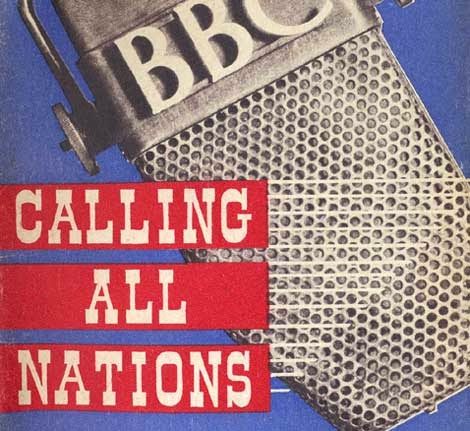
The UK is a consolidated and well established democracy which enjoys widespread respect for its democratic institutions. It also benefits from the English language and mass appeal of the British media, particularly the BBC World Service in the context of developing nations. The BBC World Service and BBC more generally, is therefore a key basis of soft power.
Critically, however, this effect does not arise because the Service is a mouthpiece for British policy; in fact, it arises precisely because it is not. It is a critical and independent source of credible information accessed by populations who do not have alternative sources of independent information. It is thus an asymmetrical source of soft power. Returning to Nye & Keohane, on the importance of free information in building credibility through free information as a basis for soft power:
“…credibility is the crucial resource, and asymmetrical credibility is a key source of power. Establishing credibility means developing a reputation for providing correct information, even when it may reflect badly on the information provider’s own country. The BBC, for example, has earned a reputation for credibility, while state-controlled radio stations in Baghdad, Beijing and Havana have not.” (Nye, Keohane, 2004)British soft power, paradoxically, is therefore gained by a unique source of news from a British perspective that is frequently critical of the UK.
It is thus disturbing that the Government has significantly cut the BBC World Service since 2010, already resulting in a loss of audience of around 14 million and the cancellation of five language services. There have been four funding cuts in four years, with each presented as a “one off” cut by Government, with the latest involving a reduction of £2.22 million in 2013.
Applying Nye & Keohane’s analysis of the centrality of free and credible information to generating soft power, therefore, surely these cuts are misguided at best.
Credibility by example: building stability & opening data
The UK has gained significant credibility by being among the first to reach internationally defined targets for international development, such as the commitment to spend 0.7% GDP on Overseas Development Assistance (ODA). It has hosted initiatives such as the Open Government Partnership. It is supporting new and equitable partnerships with governments in conflict affected situations, such as the New Deal for Engagement with Fragile States (New Deal), and is one of the leading financial and practical supporters of the UN Peacebuilding Fund. As a result the UK is able to utilise its soft power in pursuit of the foreign policy agenda represented by the Building Stability Overseas (BSOS) policy framework. Worrying, then, that Ms Patel has thus far been silent on all of the above.
The UK has also demonstrably led the world in the provision of Open Government Data (OGD), increasing transparency and by so doing enabling active citizens and civil society to hold decision makers to account. OGD aims, by the provision of usable data, to achieve impact on government efficiency, transparency, accountability, environmental sustainability, inclusion of marginalised groups, economic growth and supporting entrepreneurs. This is a practical agenda which builds on the insight of WDR11. The UK recently came top of 77 nations currently committed to pursuing OGD programmes in the latest Open Data Barometer index[4]. So when will be hear about this agenda from Ms Patel?
Soft power is entirely separate and not dependent on hard power, as some political scientists have claimed. Nye & Keohane make the same observation in relation to other states who have engaged in similar leadership and thus gained credibility and soft power which bears little relation to their capacity to project hard power:
“Canada, Sweden and the Netherlands have more influence than some other states with equivalent economic or military capabilities.” (Nye, Keohane, 2004)The Government should therefore utilise the political capital it has generated to challenge other governments to follow suit. For example while the US comes second after the UK in the Open Data Barometer overall, it scores poorly in the provision of company and land registration. Encouraging governments of wealthy countries towards greater transparency could be an important step towards reducing global tax evasion, another important HMG priority. Corruption is a first world problem. To the same end, the Government should also prioritise supporting local civil society in being able to effectively use such data to hold those in power to account.
Conclusion
The UK Government is well placed to exercise significant soft power, relative to its peers. It has already demonstrated this, notably on changing norms and practices on good governance, sexual violence and open data. It benefits both from its active leadership on such agendas, in addition to the wider influence of the BBC World Service and historic links across the globe.
It has not yet, however, realised the full potential of this power and does not appear to take a systematic approach to doing so, as can be seen by short termism in cutting the reach of the BBC World Service and the removal of core strategic funding to UK civil society, favouring instead short-termist project funding.
The Government must therefore marshal its influence through the use of its intergovernmental leadership, free media and leadership by example, and in so doing realise the combined potential of the soft power Britain could potentially wield. Ms Patel may find she needs to revisit some of her decisions sooner than she imagines in order to achieve that vision.
Subscribe to:
Posts (Atom)